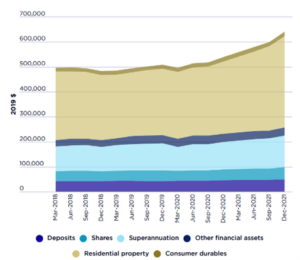
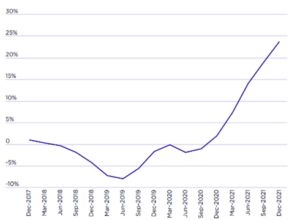
These graphs illustrate private rental stock growth (or decline) rates at sub-jurisdictional scale before and during the pandemic.
[infogram id=”_/4alrn9gZ1KiN7Bgzt0ZJ” prefix=”qSZ” format=”interactive” title=”Figure 3.11″]
Despite their differences, there is a degree of consistency in that the early phase of the pandemic saw measurable reductions in capital city private rental populations – albeit that these were more dramatic in size and sustained over time in Melbourne than in Sydney. Numerically, this involved a reduction of some 18,000 occupied private rental dwellings across metropolitan Melbourne – mainly in the Cities of Melbourne and Stonnington, as well as Port Phillip and Boroondara.
[infogram id=”_/tJOGsQOgUgZVjNmJYNkp” prefix=”ocl” format=”interactive” title=”Figure 3.12″]
One other significant point to note is the static stock of private tenancies in non-metropolitan Victoria and in ‘rest of NSW’ – essentially the area beyond the Sydney Greater Metropolitan Region. Any increase in demand for rental housing in these localities is therefore likely to have contributed to rising rents.