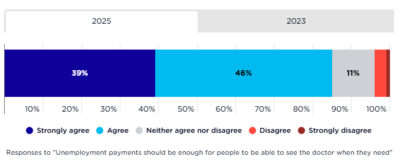
This chart shows the demographic responses in our Community attitudes towards poverty and inequality survey to the idea that Unemployment payments should be enough for people to be able to see the doctor when they need.
[infogram id=”_/59LqrRsvnhtug2rPz1Ro” prefix=”Cbo” format=”interactive” title=”Fig30_Payments enough to see the doctor_2026 demographic”]
- By age: People aged 68 and above agreed most (90%) and people aged 18 to 30 agreed least (83%).
- By gender: More women agreed with this statement (88%) than men (81%).
- By income: Differences in agreement by income level were small (84–87%).
- By income support payment: People in the lowest income quintile that were receiving carer payments agreed most (89%) and people receiving disability payments agreed least (81%).
- By employment status: People who had retired agreed most (89%) and people employed full-time agreed least (84%).
- By income source: People receiving government income support payments agreed most (86%) and people who were self-employed agreed least (80%).
- By housing status: Private rental tenants and owners without a mortgage agreed most (88%) and people who were or who were not a homeowner or tenant (i.e., had ‘other’ housing arrangements) agreed least (78%).
- By location: People from Tasmania agreed most (92%) and people from Queensland agreed least (80%).
- By voting preference: People who voted Greens agreed most (91%) and people who voted Liberal/National agreed least (83%).
- By electorate: Differences in agreement by party affiliation of elected parliamentary representative were small (85–88%)